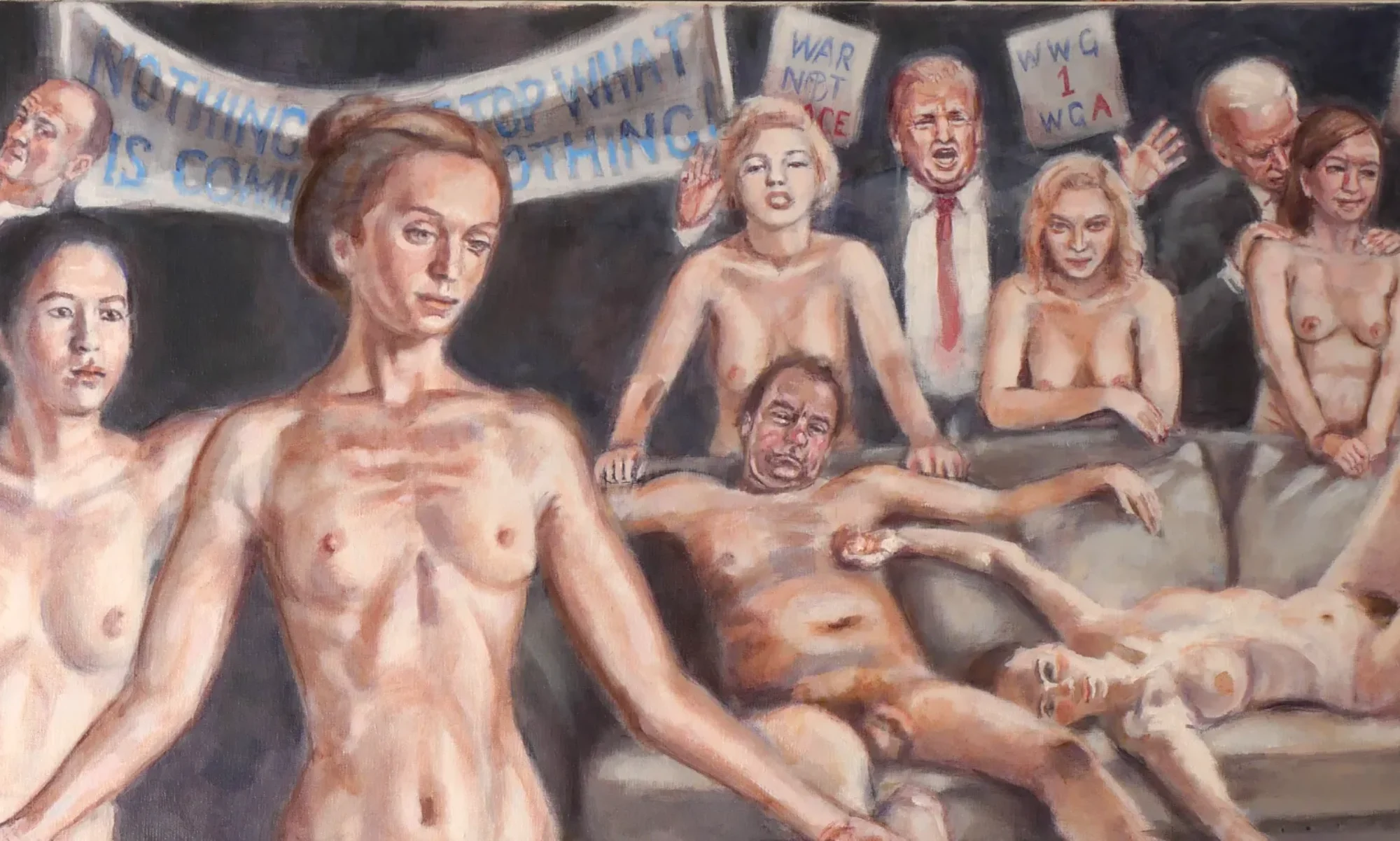
Is AI going to make painting obsolete?
I’ve been thinking a lot lately about how this technological revolution will affect both art in general and my own work in the studio.
On one hand, AI is incredibly useful. It’s a capable assistant—good for speeding up admin, helping with research, or quickly testing rough compositional ideas before committing to a canvas. On the other hand, it’s flooding us with a sea of AI slop.
I believe AI will affect visual art on the same scale as the invention of photography in the nineteenth century. When the camera arrived, many painters feared their craft was finished. If a machine could capture a likeness instantly, what was the point of spending weeks mixing pigment?
History proved them half-wrong. Photography did wipe out huge swathes of the bread-and-butter portrait trade; miniature painters and travelling portrait artists suddenly found themselves out of work. But it didn’t kill painting itself—it stripped it of its role as a recording device and, in doing so, liberated it. Freed from competing with a lens for accuracy, artists pushed into colour, texture, and paint handling in ways a camera never could. At the same time, painters absorbed the new technology into their own studios, using photographs as reference material, compositional aids, and shortcuts for complex lighting or movement. Rather than replacing painting, the camera became another tool on the workbench.
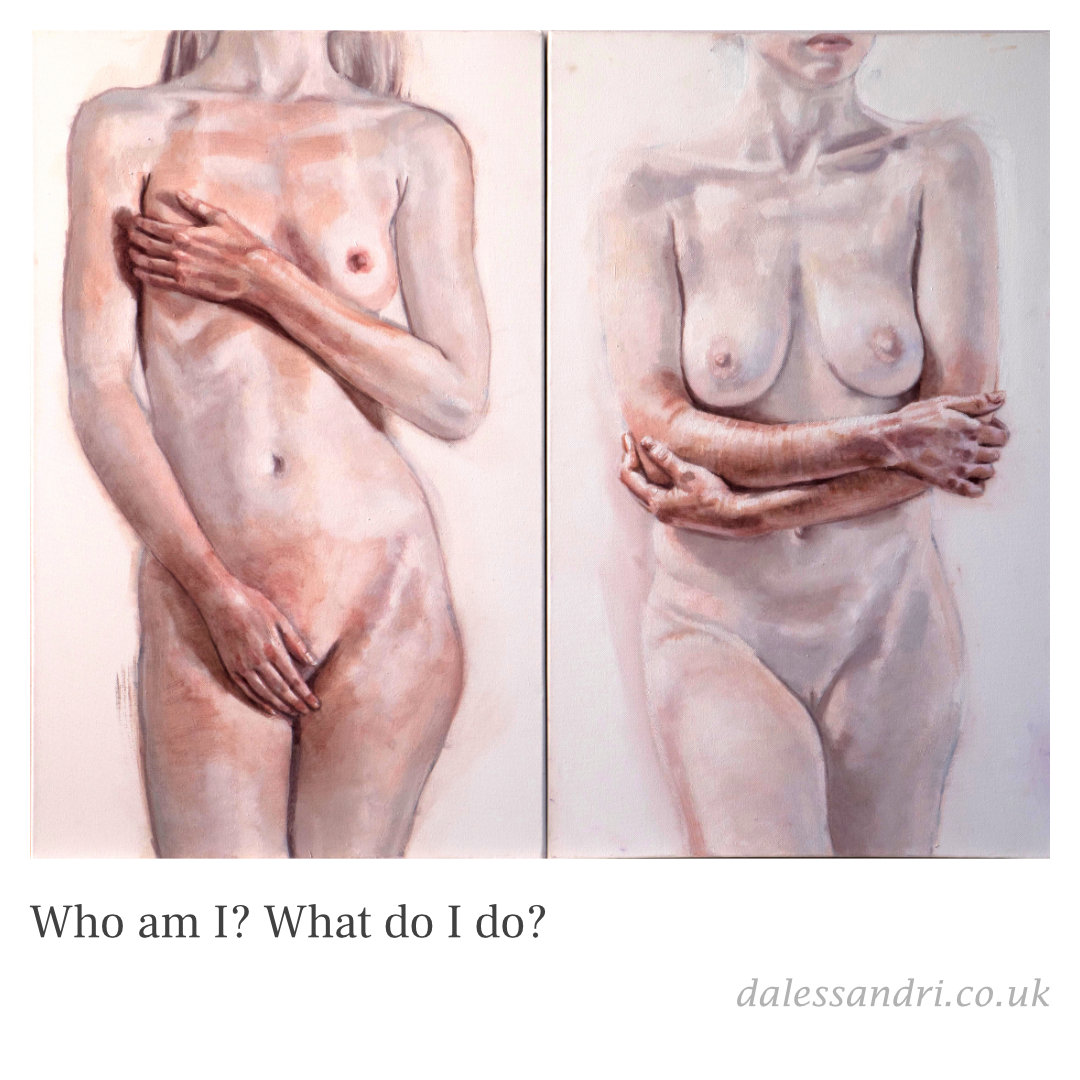
That distinction still matters in my own studio decisions. Not long ago, I had an idea for a new series of paintings called Who am I? What am I? The concept was to paint nude portraits of volunteer models from the neck down—just their torsos, leaving out their heads entirely. I wanted to see how much you could read about someone’s personality, confidence, or even their line of work purely from their posture, stance, and how they held themselves without clothes.
I still think it’s a strong concept. But the more I thought about it, the more I realised there was no real reason for it to be a painting project rather than a photography project. If the whole point is an objective, forensic look at posture and body language, a camera does that job better and more honestly. Spending months translating those bodies into oil paint wouldn’t add anything essential to the idea—so I shelved it.
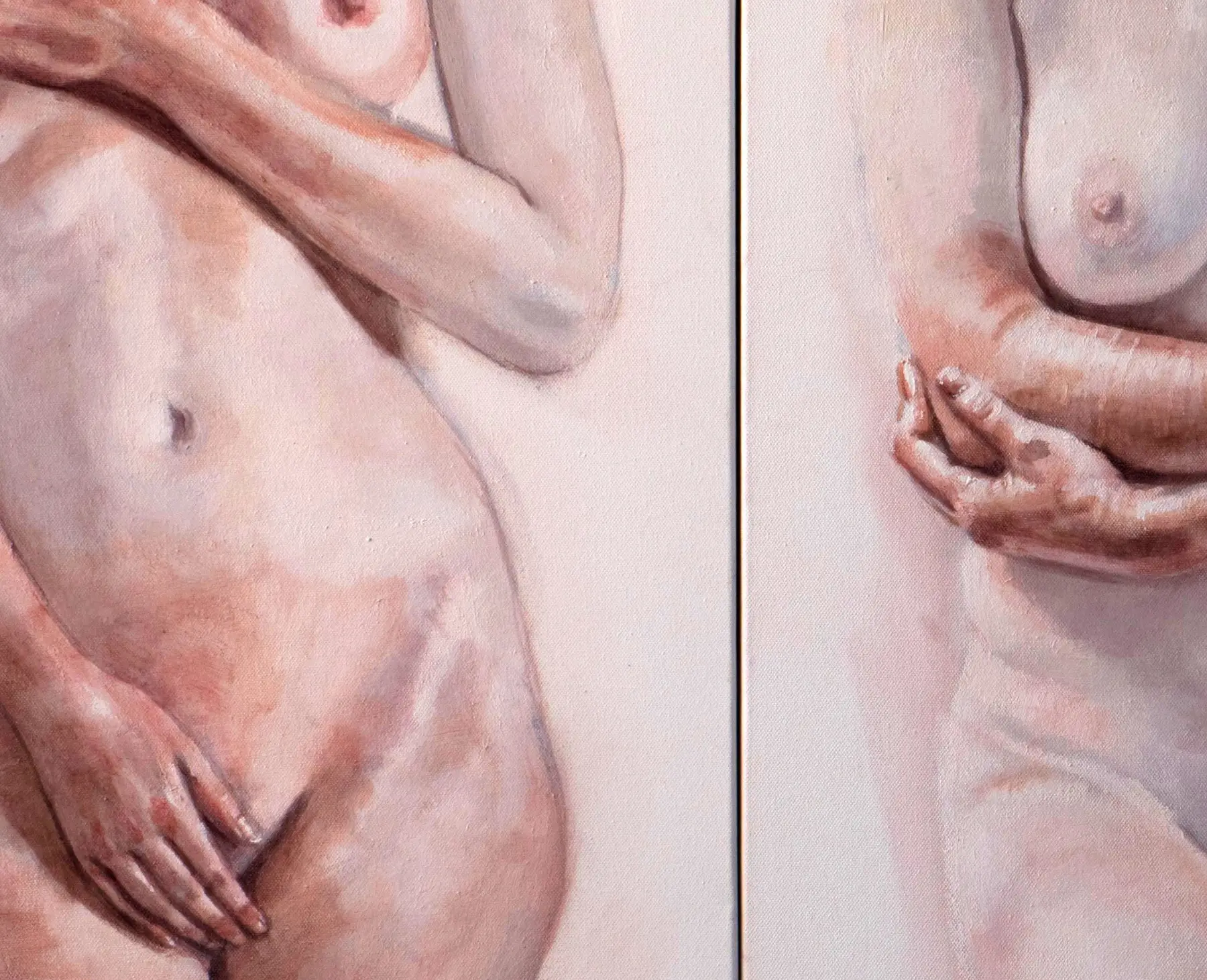
AI is forcing that exact same question on every painter today, only harder. It can already churn out slick, plausible-looking images in seconds, and it will almost certainly replace a lot of routine commercial illustration and generic digital art. If a piece of work is just about delivering a clever visual concept or a slick finish, AI can now do it faster and quite often better.
What it cannot replicate is the physical reality of a painting. An AI image is an instant product with no history behind it. A painting is a physical record of time, observation, and problem-solving. Every brushstroke, scraped-back error, and subtle shift in tone is evidence of a person standing in front of a subject, making thousands of small, imperfect choices in real time.
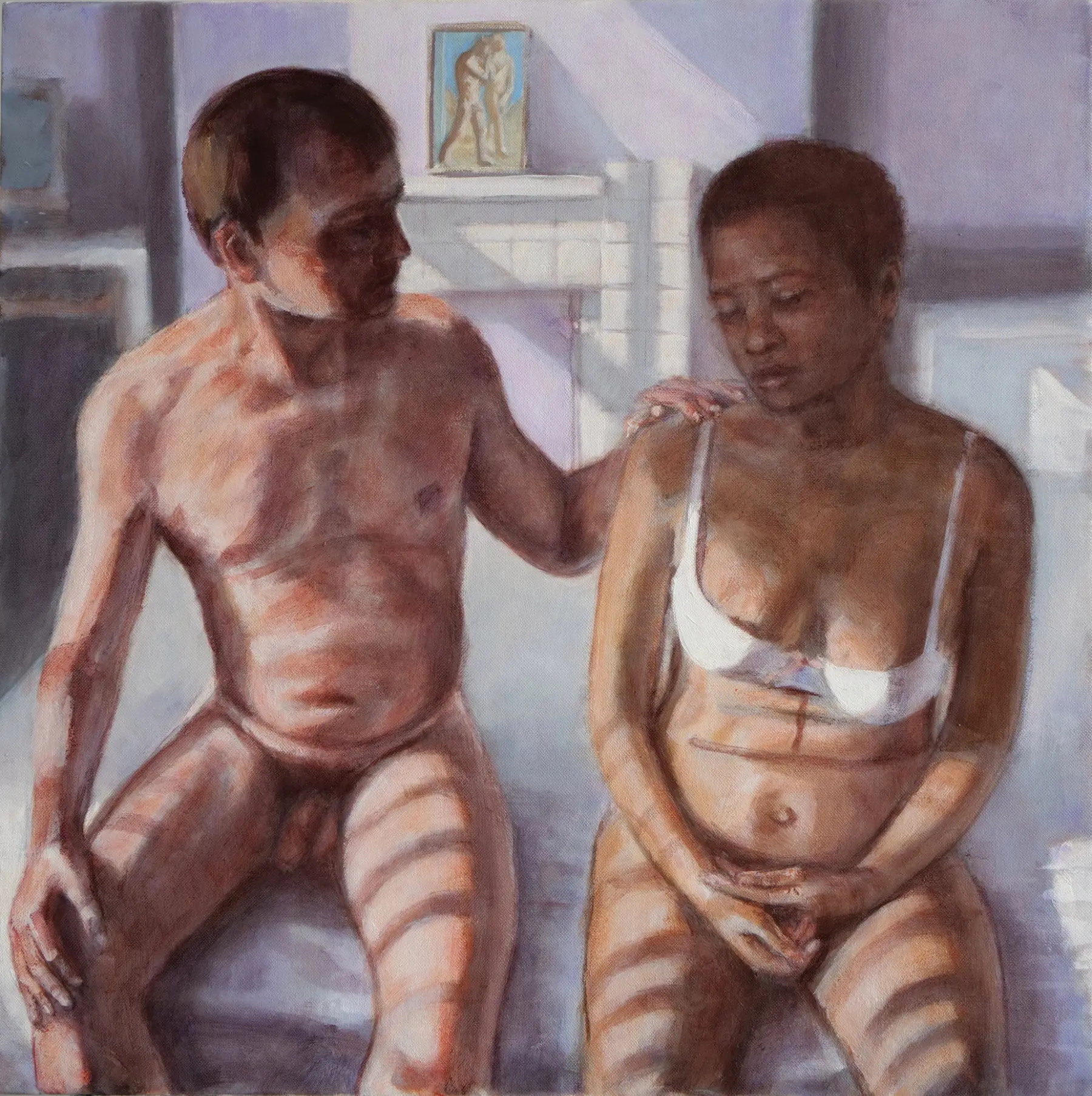
The painting above, “Man and Woman” demonstrates the difference between copying surface appearance and distilling lived experience. I was initially dissatisfied with it, even though it had a photographic likeness, and ended up completely repainting it ten years after I started. Because I had lost the photographic references, I painted it mainly from memory and imagination—and it became far stronger for it.
I’m actually excited about the practical ways AI can help me produce new work. Yet when I look at my own paintings, what gives them value to me is that they come out of lived experience—from the time spent interacting with the subject in the studio, down to the instincts and decisions shaped by my own life. I don’t know whether a viewer can always see that in the finished canvas. But it’s the clear distinction I see between my paintings and AI-generated art, and it’s why I will carry on painting.