The Pose for a Nude Portrait
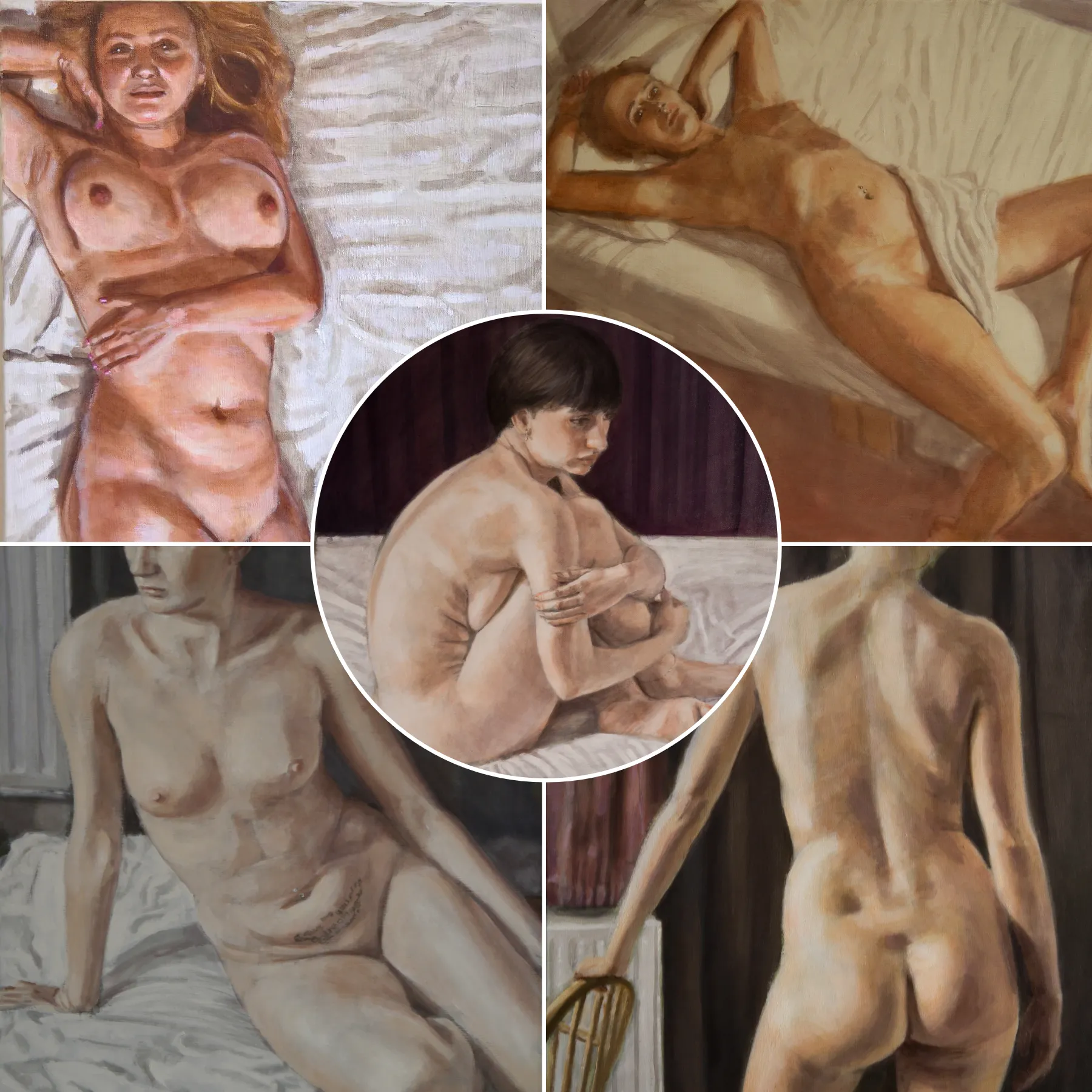
Commissioning a nude portrait is an unusual and personal decision. It’s not something I’d do myself—when I had to use my own body as a model in some earlier works because I couldn’t afford to hire someone, I felt deeply uncomfortable showing the finished painting.
But that’s just me, and plenty of people do commission them for all sorts of reasons. Unlike a standard portrait, there are no clothes, uniforms, or styling to establish context or hide behind, which makes the choices around composition, lighting, and posture much more deliberate.
Before we look at how to paint the picture, it helps to establish what you actually want it to do. Your motivation—whether clear or still half-formed—acts as the practical brief for the work.
“I want to celebrate my body.”
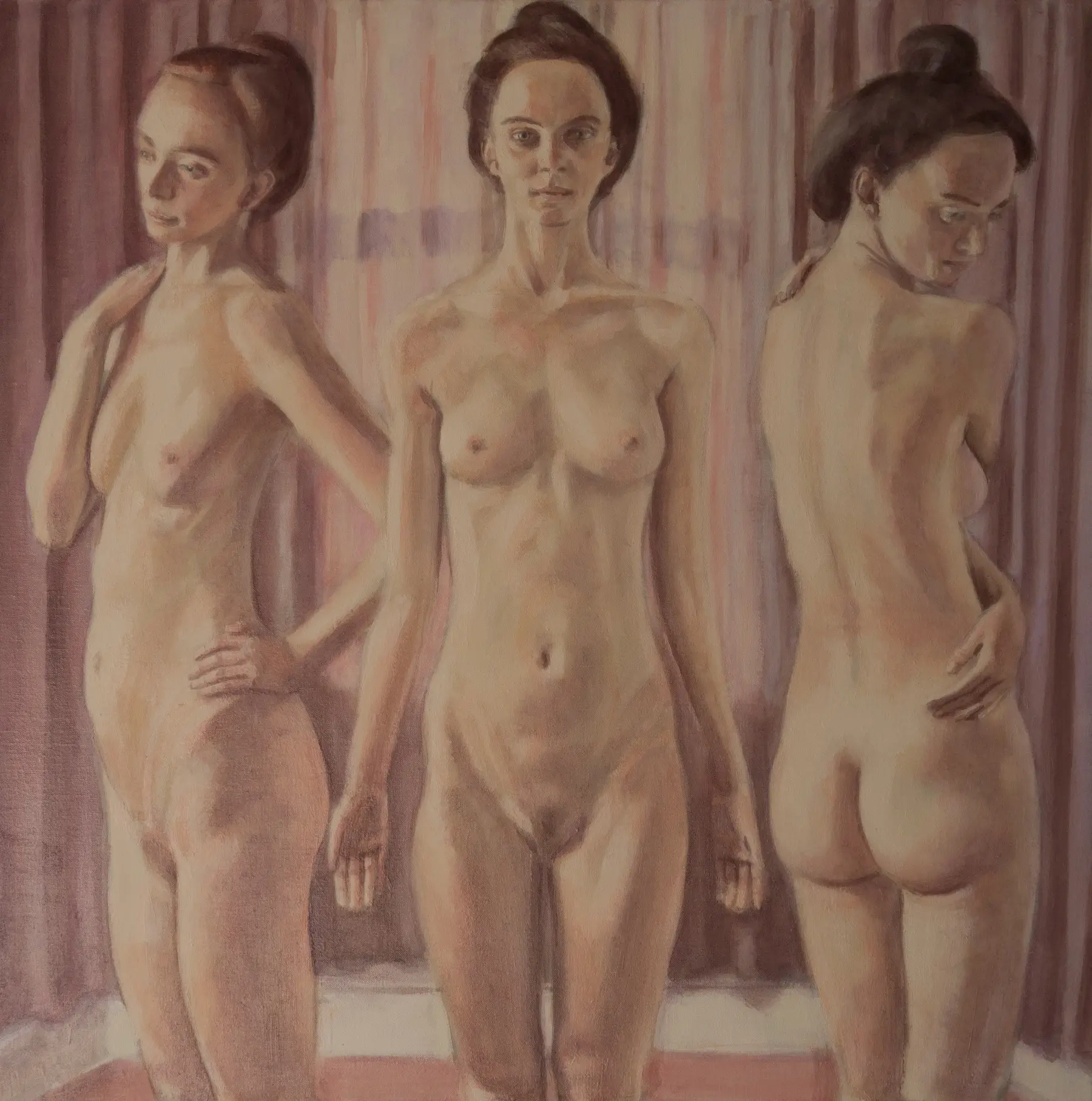
This comes from a straightforward place of feeling comfortable and happy with your body, and wanting to capture that moment in time.
The approach: Open, expansive poses suit this best. A standing pose—like a classic contrapposto, where the weight shifts to one leg—creates a natural S-curve that feels both relaxed and strong. A more frontal stance with hands on hips works equally well. Clear lighting and a direct gaze keep the composition honest and direct.
“I want to love my body.”

People often come to a portrait after illness, childbirth, or years of being overly critical of themselves. The goal here isn’t perfection; it’s simply looking at yourself honestly from the outside, without the usual self-judgement.
The approach: Seated or more contained poses usually feel best to start with. Sitting in an armchair, resting on a bed, or sitting on the floor with your knees drawn up offers a natural sense of privacy and ease, making it much easier to relax into the sitting.
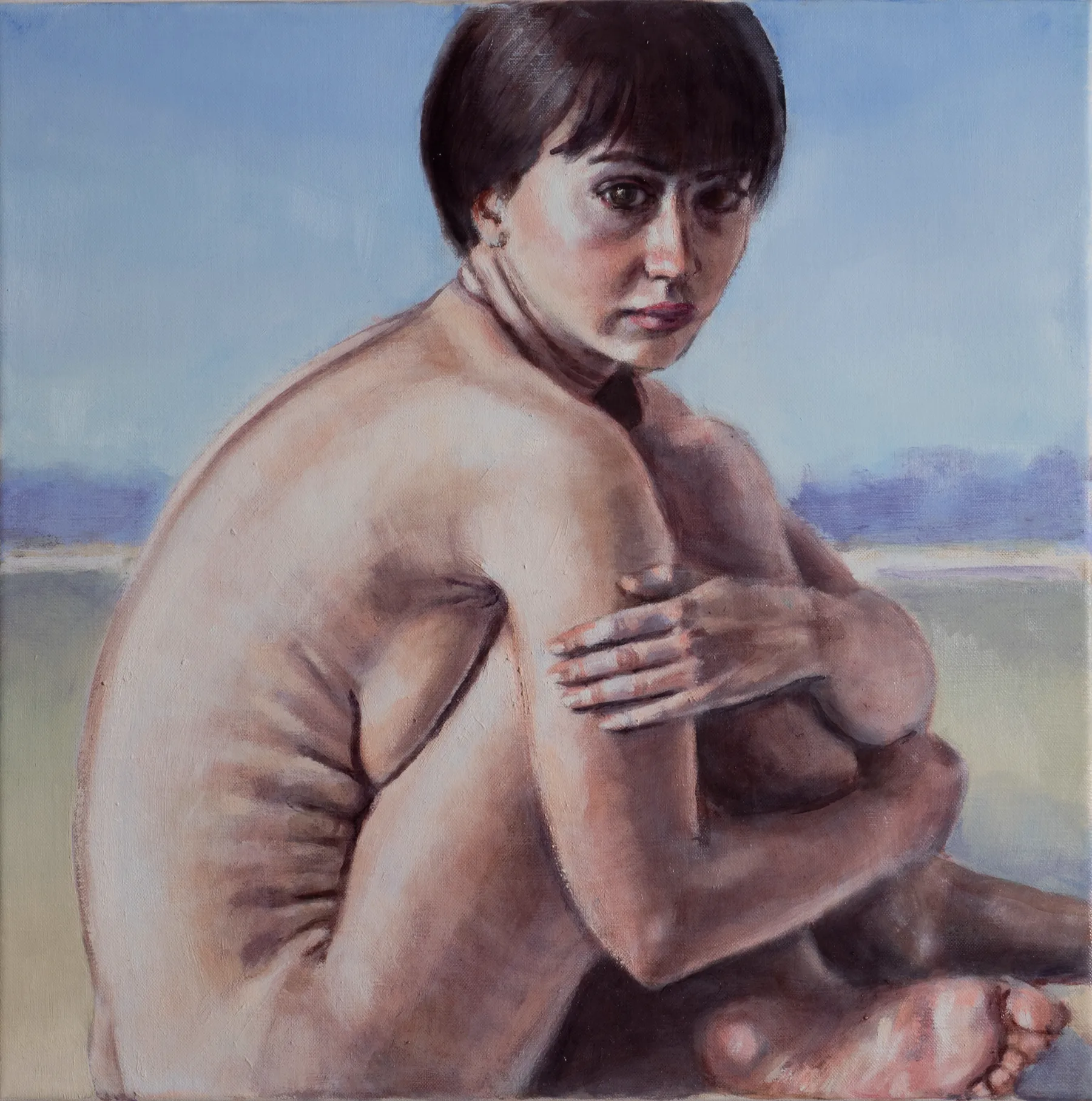
We could use soft, diffused light, which is more gentle and less clinical. An averted gaze—looking out a window, down at your hands, or into the middle distance—can create an introspective mood, capturing a quiet moment of reflection.
“I feel sensual, and empowered.”

This is simply about capturing physical energy, warmth, and sensuality on your own terms. When we look at poses, the main question is what actually feels natural and comfortable to hold, rather than performing for the canvas.
The approach: We can look at more curved, expressive postures that emphasize movement. A direct-to-viewer gaze, similar to Manet’s Olympia, gives the painting a very deliberate, self-assured presence.
“I want to be a timeless work of art.”
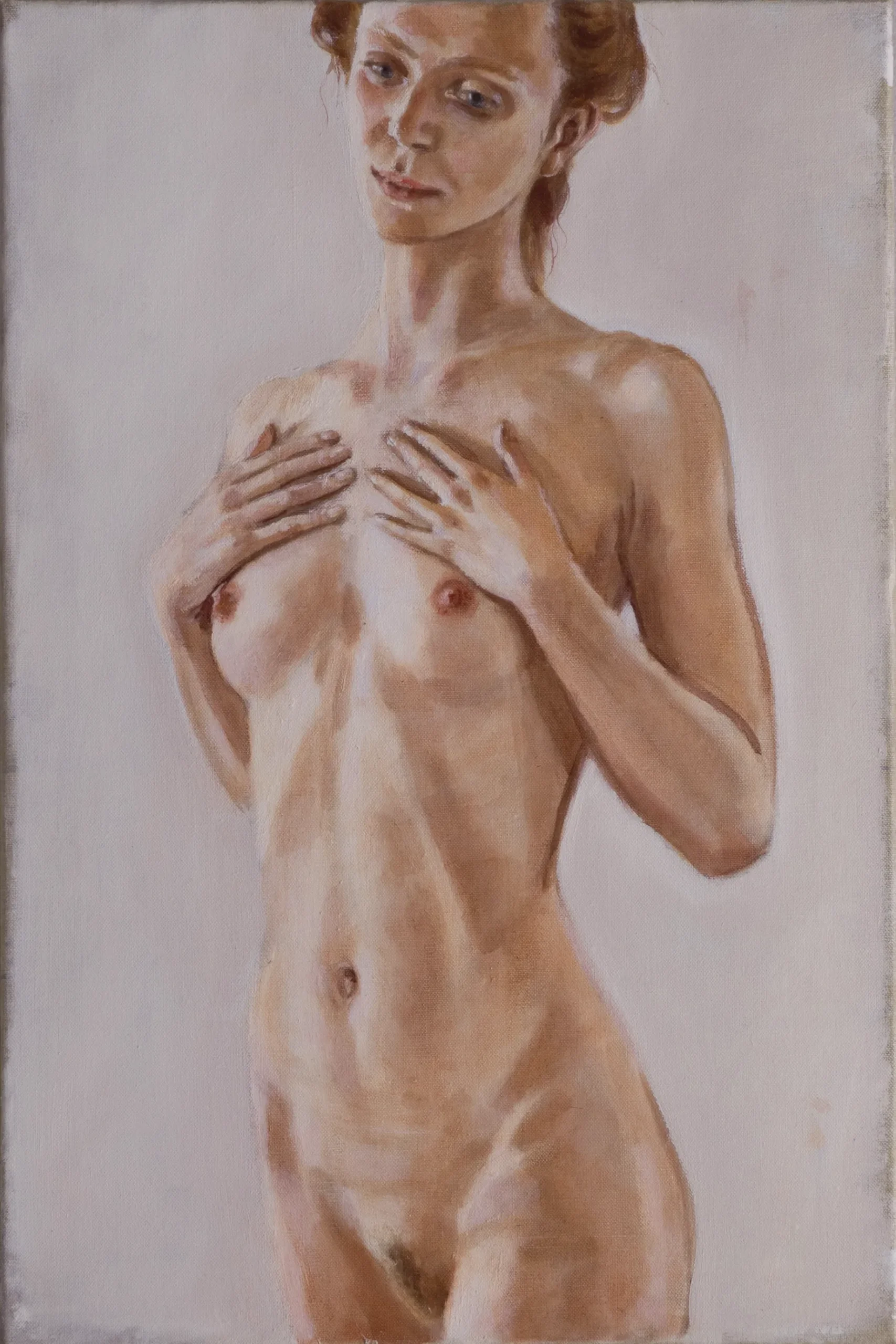
For you, this may be less about a personal statement and more about a love of art—you simply want to make something compelling together.

The approach: We can draw directly from art history, looking at poses that are more composed than naturalistic, with the emphasis on line and structure against a simple, neutral background. Strong light and shadow (chiaroscuro) can give the figure a sculptural feel, and we might even decide that a full-figure painting isn’t necessary—a study of just the torso, the back, or the hands can be just as effective.

The Practical Elements
Once we have a rough direction, we use a few basic variables to build the composition:
The Gaze: Looking directly out engages the viewer; looking away feels private and observational; closed eyes turn the focus inward.
Light and Shadow: Soft, diffused light creates gentle transitions and a calm atmosphere. Hard, directional light—like Rembrandt or Caravaggio—creates high contrast and emphasizes structure, hiding as much as it reveals.
Setting: A plain studio background keeps all attention on the figure. A home setting—a chair, a bed, or window light—adds everyday context and narrative.
Fabric: Sheets, throws, or robes aren’t just for modesty. They add colour and texture, create lines that guide the eye through the painting, and give your hands something natural to hold onto.
Finding the Pose
In practice, the final pose is rarely the first one we try. It comes out of talking things through, moving a chair, adjusting the light, and testing what actually works on the canvas—and what feels comfortable enough for you to hold.
You don’t need a grand reason to commission a painting like this, nor do you need a finished idea before we speak. My job is simply to listen, make practical suggestions, and find a composition that feels honest to you.
If you are thinking about a commission and want a straightforward, confidential chat about how it works in practice, get in touch.